Friday, August 6, 2010

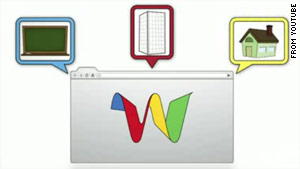
Google plans to drop Wave


-- Google is pulling the plug on Google Wave.
Google intended the messaging program, launched in 2009, to be a near-replacement for e-mail, which it said had grown tired.
But on Wednesday, the company announced that it is shuttering the project by the end of the year because it didn't have traction with consumers.
"Wave has not seen the user adoption we would have liked," Urs Hölzle, a Google senior vice president, writes on the company's official blog.
"We don't plan to continue developing Wave as a standalone product, but we will maintain the site at least through the end of the year and extend the technology for use in other Google projects."
The post does not say how many people signed up for or used Google Wave.
The code for some of Wave's innovative features -- like instant messages that were sent letter-by-letter as a person typed -- has been made available to the public and could be incorporated into future projects, Google says.
The service aimed to combine all elements of online communication -- instant messages, e-mail, Twitter feeds, etc. -- into a single "wave."
But from the start, Google says, engineers at the company were unsure how the product would be perceived by real Internet users.
"We were equally jazzed about Google Wave internally, even though we weren't quite sure how users would respond to this radically different kind of communication," the company's blog says.
Many people who tried Wave found the service to be complicated and confusing.
Google Wave was created by two Danish brothers, Jens and Lars Rasmussen, who also were the brains behind the more-successful Google Maps.
In interviews with CNN in 2009, the brothers said their goal with Wave was not only to create an outstanding product that would change the nature of online communication but to prove that innovation is still possible at a massive corporation like Google.
Their aim was to make Google Wave completely new -- and therefore risky.
"I do believe that you can achieve more if you're willing to take risks," Lars Rasmussen said at the time.
"There's almost a total correlation between the amount of risk you're willing to take and then the amount of stuff you then potentially can get done."
Wednesday's blog post from Google acknowledges their hard work and lauds them for making advancements in computer science.
"Wave has taught us a lot, and we are proud of the team for the ways in which they have pushed the boundaries of computer science," the post says.
"We are excited about what they will develop next as we continue to create innovations with the potential to advance technology and the wider Web."
Maybe next time, more people will use it.

FBI to Wikipedia: Remove our seal


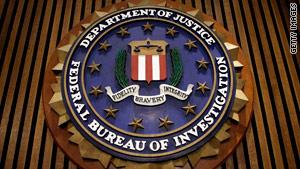
(CNN) -- The U.S. Federal Bureau of Investigation has threatened Wikipedia with legal action if the online encyclopedia doesn't remove the FBI's seal from its site.
The seal is featured in an encyclopedia entry about the FBI.
Wikipedia isn't backing down, however. The online encyclopedia -- which is run by a nonprofit group and is edited by the public -- sent a chiding letter to the FBI, explaining why, in its view, the FBI is off its legal rocker.
"In short, then, we are compelled as a matter of law and principle to deny your demand for removal of the FBI Seal from Wikipedia and Wikimedia Commons," the Wikimedia Foundation's general counsel, Mike Godwin, wrote in a letter to the FBI, which was posted online by the New York Times.
"We are in contact with outside counsel in this matter, and we are prepared to argue our view in court."
The whimsically written letter from Wikipedia says the FBI's reading of relevant law is both "idiosyncratic" and "more importantly, incorrect." It also notes that the FBI's seal appears on other websites, including in an online entry from Encyclopedia Britannica.
In a letter dated July 22, and also posted online by the Times, the FBI told Wikipedia it must remove the bureau's seal because the FBI had not approved use of the image.
"The FBI has not authorized use of the FBI seal on Wikipedia," the letter says. "The inclusion of a high quality graphic of the FBI seal on Wikipedia is particularly problematic, because it facilitates both deliberate and unwitting" copying and reprinting of the seal's image.
The FBI's deputy general counsel, David Larson, cities a particular law that says duplicating an official "insignia" is illegal without permission.
But Wikipedia strikes back on that point, saying the FBI redacted the most important part of that U.S. code, which defines an insignia as "any badge, identification card, or other insignia."
"Badges and identification cards are physical manifestations that may be used by a possessor to invoke the authority of the federal government. An encyclopedia article is not," Wikipedia's letter says. "The use of the image on Wikipedia is not for the purpose of deception or falsely to represent anyone as an agent of the federal government."
The Wikipedia letter also adds:
"Even if it could be proved that someone, somewhere, found a way to use a Wikipedia article illustration to facilitate a fraudulent representation, that would not render the illustration itself unlawful under the statute."
It's unclear if this tussle -- which has already made its way into aWikipedia entry on the FBI's seal -- will be taken to court. For now, the tech press is weighing in, often with amazement.
On the blog BoingBoing, Rob Beschizza writes that this is a no-win situation for the FBI.
"The part that's hard to understand is why the FBI would seek to abuse the law in such petulant fashion," he writes, "knowing that it will be subject to public ridicule for its actions."
The magazine Vanity Fair posted the FBI's seal on its website in a symbol of jest. And, as the blog Geekosystem says, an editor on the site aggregator Reddit jokes that maybe the FBI got Wikipedia confused with WikiLeaks -- the site that's been causing a stir lately over leaked war documents.
Cindy Cohn, from the Electronic Frontier Foundationtold the New York Times, which first reported this story, that she found the whole ordeal to be "silly" and "troubling."

Crook : It's Good To Be Bad **Xclusive First Look Posters** *Ft. Emraan Hashmi*


World’s first sand hotel


World’s first sand hotel LONDON: The world’s first sand-hotel is open for business on Weymouth beach, Dorset, in England. The 1000 tone-of-sand structure was built in a week by a team of 4 sand-sculptors.

The sand hotel has no roof, so you have a clear view of the star-filled night sky, no toilets and is not recommended for those that hate getting sand between their toes. For an offbeat experience like spending a night at the wonderful sand-hotel, you only have to pay $21.

Junk food spurring allergies


Junk food spurring allergies LONDON: Britain is facing a spike in allergies and illnesses across the country -- courtesy junk food, says a new study.

Evidence suggests, according to experts, that “industrialised” Western diets high in red meat, sugar and fat lowered the numbers of healthy bacteria in our guts. Absence of these microbes harms the immune system, causing asthma, eczema and other allergies in children.

They found that African children who were eating food similar to the diet of the earliest farmers thousands of years ago had a far lower proportion of microbes associated with obesity in adults and far more fatty acids known to protect against inflammation.

“The diet of Burkina Faso children is low in fat and animal protein and rich in starch, fibre and plant polysaccharides, and predominantly vegetarian,” The Daily Mail quoted Dr Paolo Lionetti as saying.

“All food resources are completely produced locally, cultivated and harvested nearby the village by women. Although the intake of animal protein is very low, sometimes they eat a small amount of chicken and termites,” he added.

Lindsey McManus, of Allergy U.K., said, “There is some evidence that probiotics in the gut are effective at boosting the immune system, especially in children with eczema and that they can protect against allergies.”